





Why Bone Loss Gets in the Way of Dental Implants
Dental implants need solid bone to anchor in. After a tooth is lost, the jawbone that held it slowly shrinks, and years of missing teeth, gum disease or wearing a denture can leave too little bone for a standard implant. In the upper jaw, the sinuses can also expand into the space where bone used to be.
That is why many patients are told they are not candidates for implants, or that they will need months of grafting first. At Pearl Dental Group, Dr. Andre’ Bruni evaluates severe bone loss cases with a 3D scan and, depending on what it shows, can rebuild bone with grafting or a sinus lift, or anchor implants in the denser bone of the cheekbone or the back of the upper jaw with zygomatic or pterygoid implants. For many patients, that means fixed teeth without starting over with years of grafting.
Dr. Andre' Bruni has completed more than 700 full-arch cases, including more than 50 zygomatic and pterygoid implant cases for patients with severe bone loss.
Curious what your smile could look like?
Upload a photo and our AI shows you in about a minute.
Treatment Options for Severe Bone Loss
Bone Grafting
Graft material is placed where the jawbone has thinned to rebuild its height and width. Over several months it is replaced by your own bone, creating a stable base for implants. Grafting is often done at the same visit as an extraction to preserve bone for the future.
Sinus Lift
When the upper back jaw is too thin because the sinus has dropped into the space, the sinus membrane is gently lifted and bone graft is added beneath it, giving implants room to anchor.
Pterygoid Implants
These longer implants are angled into the dense bone at the very back of the upper jaw, behind the sinus. They can support back teeth without a sinus lift and help spread chewing forces across a full arch.
Zygomatic Implants
For patients with very little upper jawbone, zygomatic implants are anchored in the cheekbone (zygoma), which stays dense even when the jaw has resorbed. They can make fixed full-arch teeth possible without extensive grafting, and in many cases temporary teeth can be attached the same day.
Your plan may combine more than one of these approaches. Dr. Bruni will explain which options fit your anatomy and why.
Patient Story: Fixed Teeth After Years of Dentures
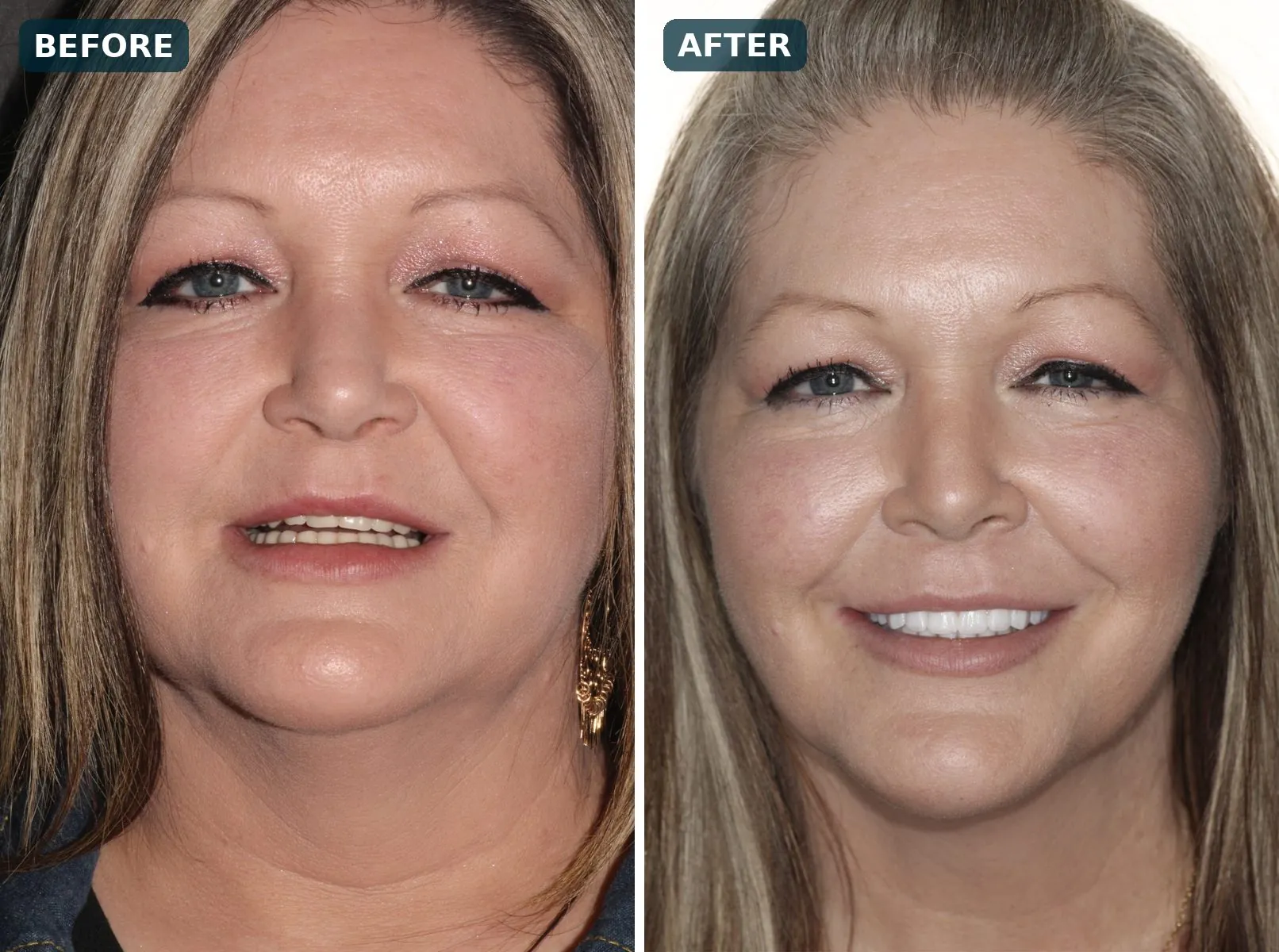
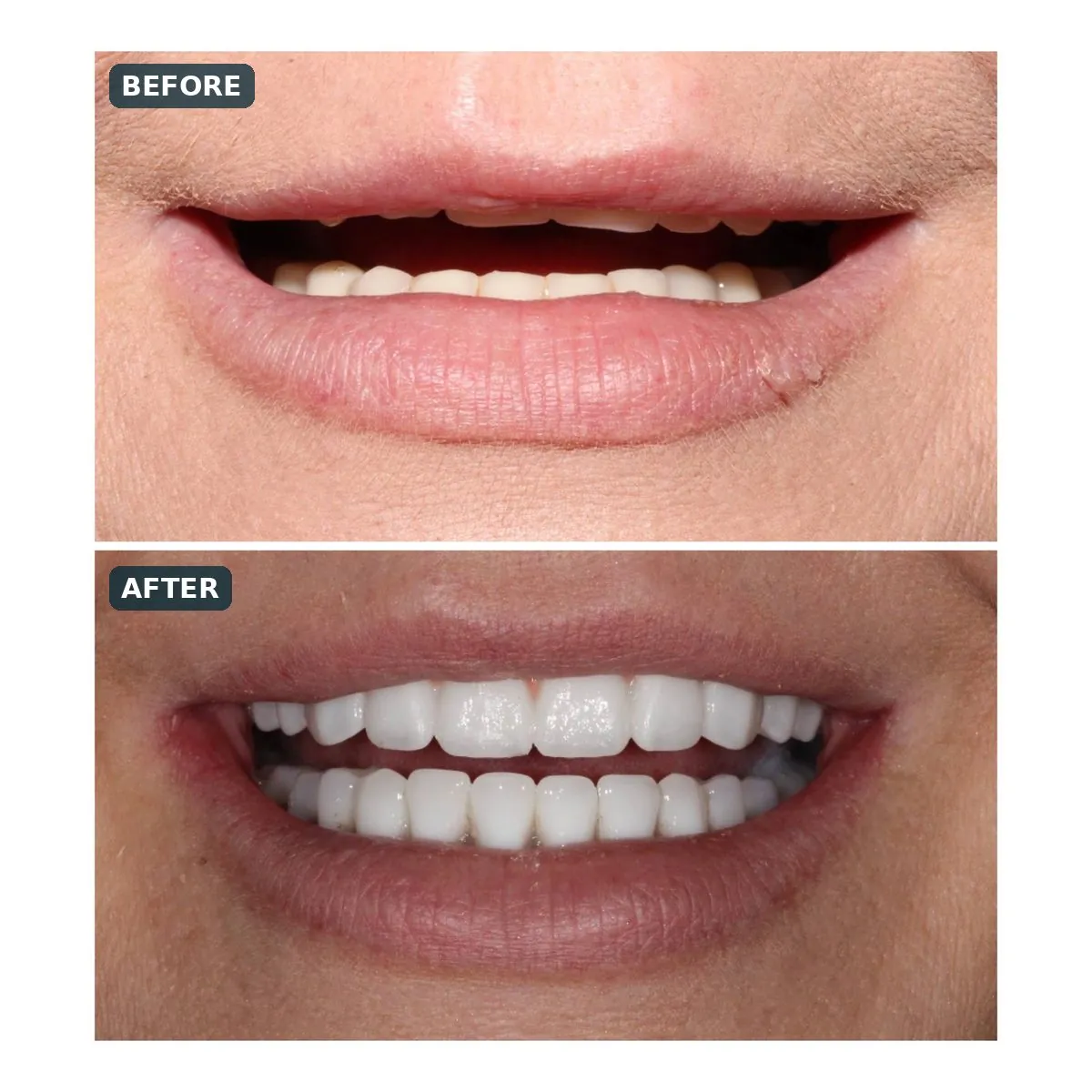
Our patient had worn dentures for many years, and over time she lost much of the bone in her upper jaw. Her upper denture was loose and showed none of her teeth when she smiled, which left her self-conscious about her smile. Just to keep it in place for a few hours, she had to use a lot of denture adhesive every day.
Because her upper bone loss was severe, Dr. Bruni anchored her new teeth with zygomatic and pterygoid implants, and she left with a fixed same-day smile. Four months later, she received her final zirconia teeth, made in our in-house lab.
Her new teeth gave her a more youthful look, and she can eat, chew and taste food normally again. In the video, she sees her final teeth for the first time and can’t get over how real they look.

Cost and Financing
Because every severe bone loss case is different, the cost depends on how many implants you need, which techniques are used and whether grafting is involved. At your free consultation, Dr. Bruni reviews your 3D scan and you receive a written estimate before you decide anything.
We offer financing through CareCredit, Proceed Finance, Cherry and Sunbit to help spread the cost into monthly payments. Learn about insurance and financing.
How We Plan Your Treatment
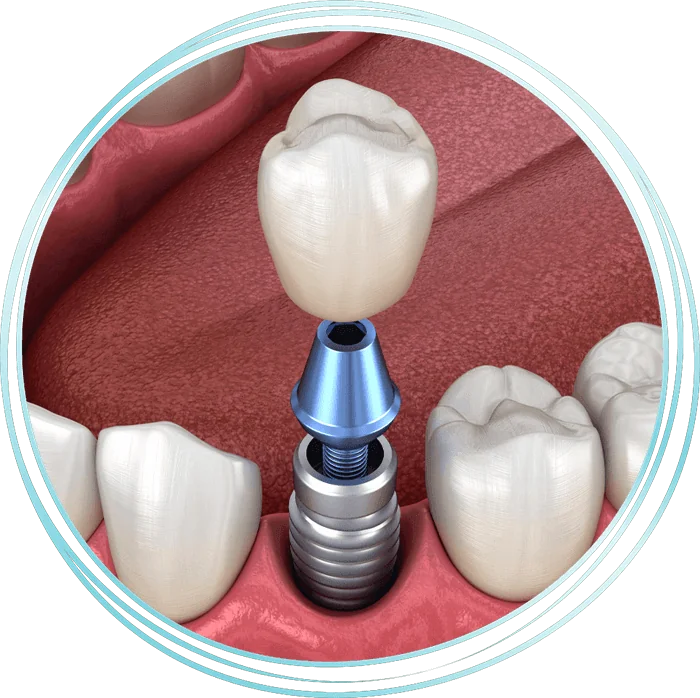
Every case starts with a 3D CBCT scan, which shows the height, width and density of your remaining bone, the position of your sinuses and nerves, and where the strongest anchor points are. Dr. Bruni plans implant positions digitally from that scan, so the surgical plan and your final teeth are designed together.
For full-arch cases, you can leave surgery with fixed temporary teeth in many cases. After healing, our in-house lab designs and mills your final premium zirconia teeth, which are delivered a few months later. Nitrous oxide, oral sedation and IV sedation are available for your comfort. Learn about full mouth dental implants.
Why Choose Pearl Dental Group for Severe Bone Loss?
Severe bone loss cases call for experience with advanced techniques that many practices do not offer. Dr. Andre’ Bruni, DDS, has more than 25 years of experience, has placed more than 10,000 implants and has completed more than 700 full-arch cases. His advanced training includes zygomatic and pterygoid implants, sinus lifts and bone grafting with Dr. Dan Holtzclaw, the Pikos Institute and the LSU Implant Continuum.
Planning, surgery and your final teeth all happen under one roof with our own dental lab, at our Perkins Rd office in Baton Rouge. If you have been told you are not a candidate for implants, a second opinion may show options you have not been offered. Call (225) 277-3311 to book a free consultation, or start with a free virtual consult.
Frequently Asked Questions
Often, yes. Zygomatic and pterygoid implants anchor in dense bone that remains even after the jaw has resorbed, and bone grafting or a sinus lift can rebuild areas that are too thin. A 3D scan at your consultation shows which options fit your case.
Zygomatic implants are longer implants anchored in the cheekbone (zygoma) instead of the upper jaw. They are used when the upper jaw has too little bone for standard implants and can support a fixed full arch of teeth, often without extensive grafting.
Pterygoid implants are angled into the dense bone at the very back of the upper jaw, behind the sinus. They can support back teeth without a sinus lift and help stabilize a full-arch restoration.
Not always. Some patients need grafting or a sinus lift, while others can avoid it with zygomatic or pterygoid implants. Dr. Bruni will review your scan with you and explain the trade-offs of each approach.
In many full-arch cases, yes. When the implants are stable at surgery, fixed temporary teeth can be attached the same day. Your final zirconia teeth are made in our in-house lab and delivered a few months later.
Cost depends on the number of implants, the techniques used and whether grafting is needed. You will receive a written estimate at your free consultation, and financing is available.