






If you’re missing most or all of your teeth, you may be trying to decide between traditional dentures and dental implants.
Both can replace missing teeth, but the experience of wearing and maintaining them can be very different.
Traditional dentures are removable and rest primarily on the gums and supporting tissues. Dental implants, on the other hand, are placed into the jawbone and can be used to support either a removable implant denture or a fixed full-arch restoration.
At Pearl Dental Group in Baton Rouge, we treat patients across this entire spectrum—from traditional dentures to implant-supported dentures and fixed full-mouth dental implants.
The best solution depends on your oral health, available bone, medical history, expectations, lifestyle, and budget.
What Are Traditional Dentures?
Traditional dentures are removable prosthetic teeth designed to replace an entire arch of missing teeth.
An upper denture typically covers a portion of the palate and relies on the shape of the tissues, suction, and fit for retention.
A lower denture rests on the lower jaw and surrounding tissues. Because the tongue, cheeks, and muscles constantly move around it—and because there is no palate to help provide suction—lower dentures can be more difficult for some patients to stabilize.
Dentures remain a valuable treatment option, particularly for patients who want to replace missing teeth without implant surgery.
What Are Dental Implants?
Dental implants are small fixtures placed into the jawbone to provide support for replacement teeth.
When replacing an entire arch, implants can be used in different ways.
Two common approaches are:
- Implant-supported removable dentures
- Fixed full-arch dental implants
This distinction is important because saying “dentures versus implants” can be misleading.
Implants don’t necessarily eliminate dentures. In some treatments, implants are actually used to stabilize a removable denture.
What Is an Implant-Supported Denture?
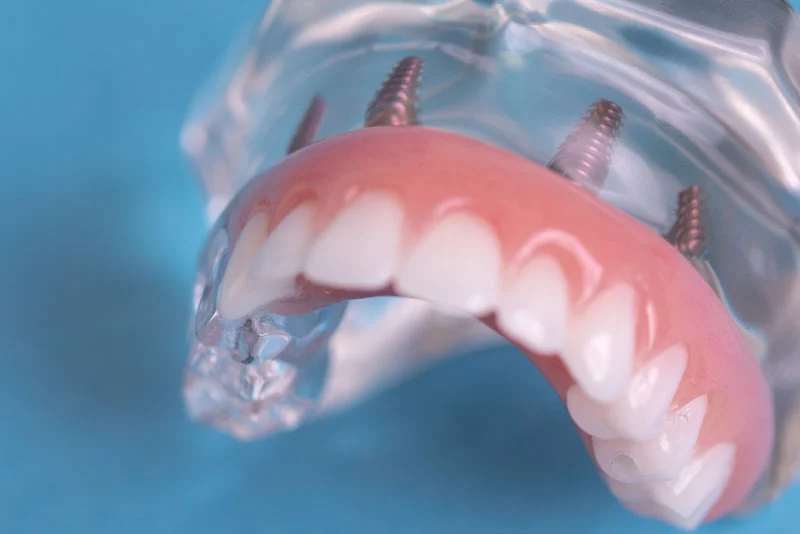
An implant-supported denture—sometimes called an overdenture—uses dental implants to improve the retention and stability of a removable prosthesis.
The patient still removes the denture for cleaning, but the denture connects to implants rather than relying entirely on the gums for support and retention.
For some patients, this can provide a significant improvement over a conventional removable denture.
An implant-supported denture may also provide a more affordable middle ground between traditional dentures and a fixed full-arch restoration.
What Are Fixed Full-Mouth Dental Implants?
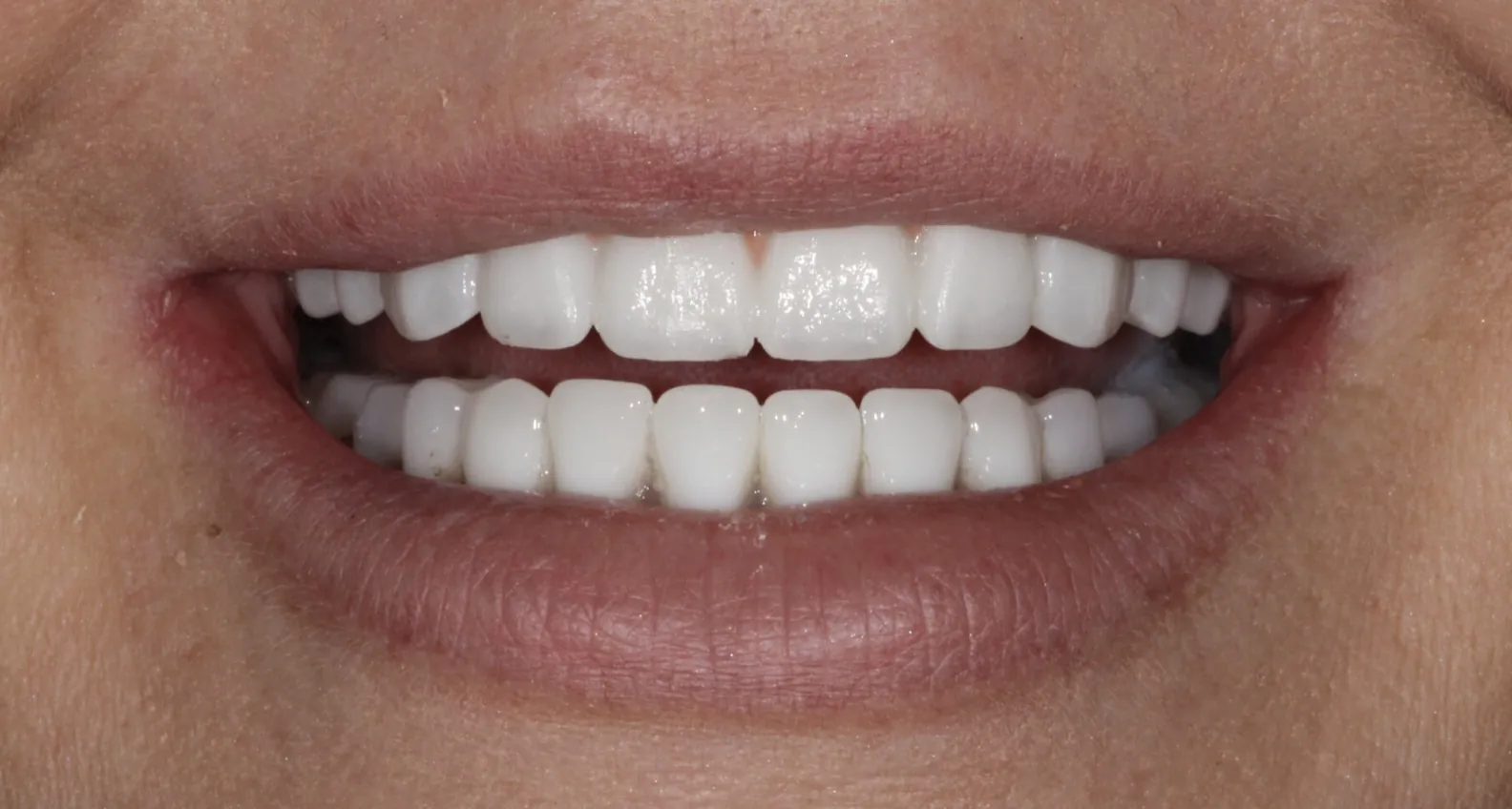
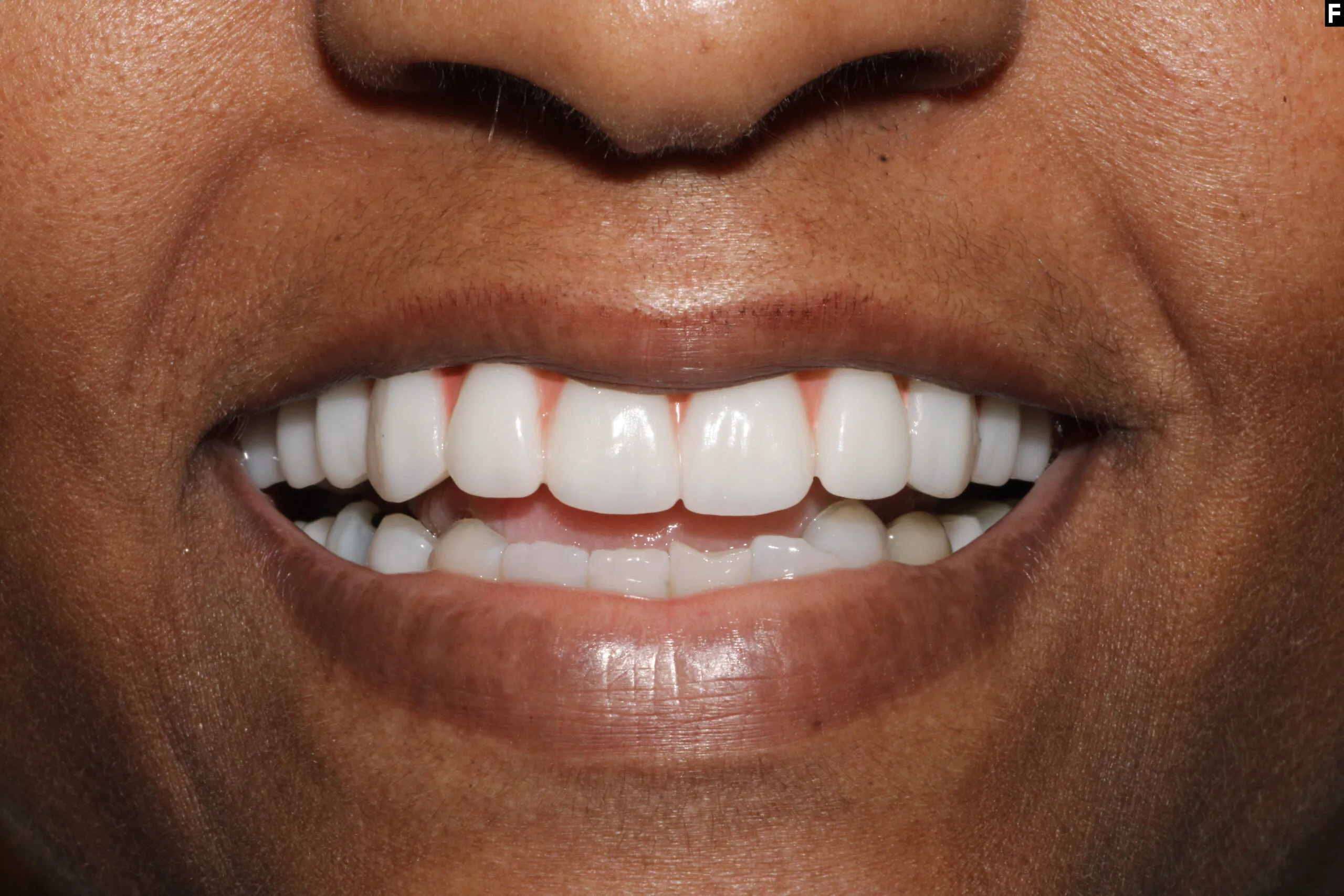
Full-mouth dental implants use multiple implants to support a fixed arch of replacement teeth.
You may hear this treatment described as:
- All-on-4
- All-on-X
- Full-arch implants
- Fixed implant bridge
- Full-mouth dental implants
Unlike a traditional denture, a fixed full-arch restoration is not removed by the patient each night.
The restoration is secured to the implants and is generally removed only by the dental team when clinically necessary.
For appropriate patients, this can provide an experience much closer to having fixed teeth than wearing a traditional removable denture.
Dentures vs. Dental Implants: The Biggest Difference
The fundamental difference is support and stability.
Traditional dentures primarily rely on the gums and underlying tissues.
Implant-supported teeth use implants anchored within the jawbone for support or retention.
That difference can affect:
- Chewing
- Stability
- Speech
- Comfort
- Confidence
- Cleaning
- Maintenance
- Cost
- Treatment time
Neither solution is automatically right for everyone.
Which Option Feels More Like Natural Teeth?
Fixed dental implant restorations generally provide greater stability than traditional removable dentures because they are supported by implants rather than resting solely on the gums.
A traditional denture can move during chewing or speaking, particularly when retention is limited.
Lower dentures are often where patients notice this difference the most.
Implants can provide additional stability, whether they’re supporting a removable overdenture or a fixed restoration.
Can You Eat Better With Dental Implants?
Chewing ability is one of the primary reasons patients consider implants.
Traditional dentures can restore function, but they don’t provide the same type of support as natural teeth.
Certain foods can be more difficult to manage with removable dentures, particularly foods that are hard, sticky, or require significant chewing force.
Implant-supported teeth generally provide improved stability during chewing.
However, patients with dental implants still need to follow appropriate dietary recommendations—particularly while implants are healing.
Do Dental Implants Affect Taste?
This question frequently comes from patients who wear an upper denture.
A traditional upper denture may cover part of the palate.
Depending on the design and patient’s anatomy, an implant-supported solution may allow for a different prosthetic design with less palatal coverage.
Some patients prefer this because the roof of the mouth isn’t covered in the same way.
The appropriate design depends on the type of restoration and individual anatomy.
Which Is More Comfortable?
Comfort is subjective and varies significantly from patient to patient.
A well-made traditional denture can be comfortable for many people.
However, dentures rely on the tissues underneath for support. Movement or pressure can sometimes lead to sore areas, particularly when the fit changes over time.
Implant-supported restorations derive support or retention from implants, which can reduce some of the movement associated with conventional dentures.
Do Dentures Cause Bone Loss?
Bone naturally changes after teeth are removed.
Without tooth roots, the jawbone in the area can gradually remodel and decrease in volume.
This is one reason a denture that once fit well may become loose over time.
Dental implants interact with the surrounding jawbone and can help maintain bone in the areas where implants are placed.
However, implants don’t completely prevent every future change in the jawbone or gum tissues.
What Happens When Dentures Become Loose?
As the jaw and soft tissues change, a removable denture may lose some of its original fit.
Depending on the situation, treatment may include:
- Adjustment
- Reline
- Replacement
- Denture adhesive
- Dental implants for additional retention
If a denture repeatedly becomes loose or difficult to function with, it may be worth discussing whether implants could improve stability.
Which Is Easier to Clean?
This is one area where traditional dentures have an advantage.
A removable denture can be taken out of the mouth for cleaning.
A fixed full-arch implant restoration stays in the mouth, so patients must clean around and underneath the prosthesis.
This is an important point that is sometimes overlooked when discussing full-mouth implants.
Fixed teeth are convenient because the patient doesn’t remove them, but that does not mean they are maintenance-free.
Patients may need to use:
- Specialized floss
- Floss threaders
- Interdental brushes
- Water flossers
- Other cleaning aids recommended by their dental team
Regular professional maintenance is also important.
If you’re considering fixed implant teeth, you should understand the hygiene requirements before choosing treatment.
Do You Take Dental Implants Out at Night?
It depends on the restoration.
An implant-supported overdenture is removable and is generally taken out by the patient for cleaning.
A fixed full-arch implant restoration remains attached to the implants and isn’t routinely removed by the patient.
This is one of the biggest lifestyle differences between the two treatment options.
What About All-on-4 or All-on-X?
All-on-4 dental implants are one approach to replacing a complete arch of teeth using multiple strategically positioned implants.
The term All-on-X is often used more broadly because the number of implants may vary according to the patient’s anatomy and treatment plan.
The goal is to use appropriately positioned implants to support a fixed full-arch restoration.
Not every patient should receive exactly the same number of implants.
Treatment should be based on the patient’s anatomy, bone, bite, restorative design, and other clinical considerations.
Can I Get Fixed Teeth the Same Day?
In appropriate cases, patients undergoing full-arch implant treatment may receive a fixed temporary restoration on or around the time implants are placed.
This is sometimes marketed as “teeth in a day.”
However, it’s important to understand what that means.
The temporary teeth may be attached immediately, but the implants underneath are not fully healed.
The bone still needs time to integrate with the implants.
Patients must follow dietary and hygiene instructions carefully during this period.
Does Everyone Have Enough Bone for Dental Implants?
No.
Available bone is an important consideration when planning implant treatment.
At Pearl Dental Group, we use 3D CBCT imaging to evaluate the jawbone and surrounding anatomy when planning implant cases.
Patients with significant bone loss may require additional procedures or a different implant strategy.
Being told that you have bone loss doesn’t automatically mean implants are impossible, but it may make treatment more complex.
Who May Be Better Suited for Traditional Dentures?
Traditional dentures may make sense for patients who:
- Want the lowest initial treatment cost
- Don’t want implant surgery
- Aren’t appropriate candidates for implant surgery
- Prefer a removable restoration
- Have medical or anatomical considerations affecting implant treatment
- Want to avoid a more extensive treatment process
Dentures remain an important and legitimate treatment option.
Not every patient needs—or wants—fixed dental implants.
Who May Benefit From Implant-Supported Dentures?
Implant-supported removable dentures may be particularly attractive for someone who:
- Has difficulty keeping a traditional denture stable
- Wants improved retention
- Is comfortable removing the denture for cleaning
- Wants a more affordable implant option than a fixed full arch
- Has appropriate bone and health for implant treatment
For many patients, this represents a practical compromise between conventional dentures and fixed implant teeth.
Who May Prefer Fixed Full-Mouth Dental Implants?
A fixed full-arch dental implant solution may be considered for patients who:
- Have lost most or all of their teeth
- Have failing teeth with a poor long-term prognosis
- Don’t want removable dentures
- Want greater stability when eating and speaking
- Understand the hygiene and maintenance requirements
- Have appropriate anatomy and health for treatment
A comprehensive evaluation is necessary to determine whether fixed full-arch treatment is appropriate.
Dentures vs. Dental Implants: What About Cost?
Traditional dentures generally have a substantially lower initial cost than full-mouth dental implants.
Implant treatment involves surgical placement of implants, restorative components, laboratory work, and potentially additional procedures.
The cost also varies considerably depending on whether you’re considering:
Traditional denture → Implant-supported overdenture → Fixed full-arch implants
These represent very different levels of treatment.
When comparing costs, make sure you understand exactly what is included.
If cost is an important part of your decision, read our guide to dental implant costs in Baton Rouge.
Financing may also be available for qualified patients.
Which Lasts Longer?
Both dentures and implant restorations require ongoing care and may eventually need repair, maintenance, or replacement.
Traditional dentures can wear and may need relining or replacement as the mouth changes.
Dental implants themselves can provide long-term support when appropriately planned and maintained, but the prosthetic teeth attached to them can still experience wear, fracture, or other complications.
No dental restoration should be considered maintenance-free or guaranteed for life.
What If I Already Have Dentures?
You don’t necessarily have to remain with traditional dentures forever.
Patients who have worn dentures for years can still be evaluated for dental implants.
The amount of available bone becomes an important consideration, particularly after teeth have been missing for a long time.
A 3D CBCT scan can help determine what options may be available.
Depending on your anatomy, treatment could potentially range from adding implants to stabilize a removable denture to considering a fixed full-arch restoration.
How Pearl Dental Group Helps Patients Compare Their Options
At Pearl Dental Group in Baton Rouge, we don’t believe every patient missing all of their teeth needs the same treatment.
We evaluate the patient’s:
- Remaining teeth
- Jawbone
- Gum tissues
- Bite
- Medical history
- Medications
- Current dentures
- Expectations
- Hygiene ability
- Lifestyle
- Budget
We can then discuss the advantages and disadvantages of traditional dentures, implant-supported removable dentures, and fixed full-mouth dental implants.
For implant cases, 3D CBCT imaging and digital treatment planning help us evaluate the available anatomy and plan treatment around the final restoration.
Dentures or Dental Implants: Which Should You Choose?
If your primary concern is minimizing the initial cost and avoiding surgery, traditional dentures may be the right choice.
If you want a removable denture with improved stability, an implant-supported overdenture may provide an excellent middle ground.
If your goal is to have teeth that remain fixed in your mouth and provide greater stability, full-arch dental implants may be worth considering.
There isn’t one solution that’s best for everyone.
The right question isn’t simply:
“Are dental implants better than dentures?”
It’s:
“Which option provides the best combination of function, comfort, maintainability, and affordability for me?”
At Pearl Dental Group, we can help you answer that question.
Considering Dentures or Dental Implants in Baton Rouge?
If you’re struggling with missing teeth, loose dentures, or teeth that can no longer be predictably restored, you may have more options than you realize.
Pearl Dental Group in Baton Rouge provides traditional restorative dentistry as well as implant-supported dentures and advanced full-mouth dental implant treatment.
The first step is evaluating your teeth, bone, health, and goals so you can understand the advantages, disadvantages, and costs of each option.
Schedule a consultation with Pearl Dental Group to find out whether traditional dentures, implant-supported dentures, or fixed dental implants may be right for you.
This article provides general educational information and is not a substitute for individualized dental or medical advice. Dental implant candidacy, surgical procedures, costs, and treatment recommendations vary by patient.