







If you’re missing a single tooth, two of the most common replacement options are a dental implant and a traditional dental bridge.
Both can restore your smile and ability to chew, but they accomplish that goal in very different ways.
A dental implant replaces the missing tooth without relying on neighboring teeth for support. A traditional bridge uses the teeth on either side of the space to support the replacement tooth.
So which is better?
There isn’t one answer for every patient. The condition of the neighboring teeth, available bone, location of the missing tooth, cost, treatment time, medical history, and long-term goals all matter.
At Pearl Dental Group in Baton Rouge, we offer both dental implants and bridges. Our goal isn’t to recommend an implant simply because a tooth is missing. It’s to determine which option makes the most sense for the individual patient.
What Is a Single-Tooth Dental Implant?
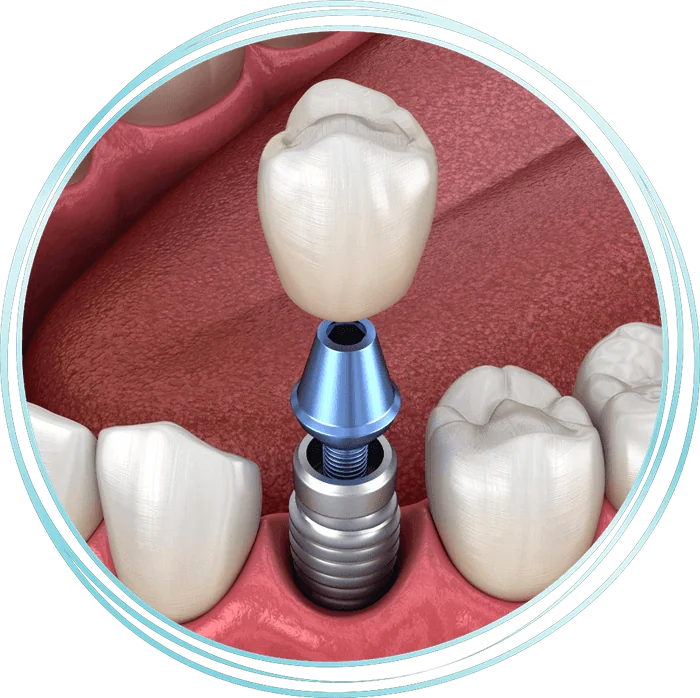
A single-tooth dental implant replaces a missing tooth with an implant placed into the jawbone.
The restoration generally consists of three components:
- Dental implant
- Abutment
- Dental crown
The implant acts as the foundation for the replacement tooth, while the crown is the portion you see above the gumline.
One of the biggest advantages of an implant is that it can replace a missing tooth without requiring the neighboring teeth to support the restoration.
What Is a Dental Bridge?
A traditional dental bridge replaces a missing tooth by using neighboring teeth for support.
For example, if one tooth is missing, the teeth on either side of the space may be prepared for crowns. Those crowns are connected to an artificial tooth, called a pontic, that fills the missing space.
The result is typically a three-unit restoration:
Crown – Replacement Tooth – Crown
Unlike an implant, a traditional bridge does not require placement of a fixture into the jawbone.
Dental Implant vs. Bridge: The Biggest Difference
The most important difference is how the replacement tooth is supported.
A dental implant is independently supported by the jawbone.
A traditional bridge depends on neighboring teeth.
That difference affects treatment planning, cleaning, cost, treatment time, and what happens to the adjacent teeth.
Advantage of an Implant: Preserving Healthy Neighboring Teeth
Imagine that you’re missing one tooth, but the teeth on either side of the space are completely healthy and have never had large fillings or crowns.
To make a traditional bridge, those neighboring teeth generally need to be prepared for crowns.
With a dental implant, those teeth can often remain untouched.
For many patients, this is one of the strongest reasons to consider an implant.
If the neighboring teeth are healthy, avoiding unnecessary preparation can be valuable.
But What If the Neighboring Teeth Already Need Crowns?
This is where the decision becomes more interesting.
Suppose you’re missing a tooth and both adjacent teeth already have large fillings, fractures, significant wear, or other problems that may require crowns.
In that situation, a traditional bridge may become a very reasonable treatment option.
If the neighboring teeth need restorations anyway, preparing them to support a bridge may not carry the same disadvantage as preparing two completely healthy teeth.
This is why we don’t believe every missing tooth automatically requires an implant.
The condition of the entire area should determine the treatment—not simply the fact that a tooth is missing.
Which Looks More Natural: An Implant or Bridge?
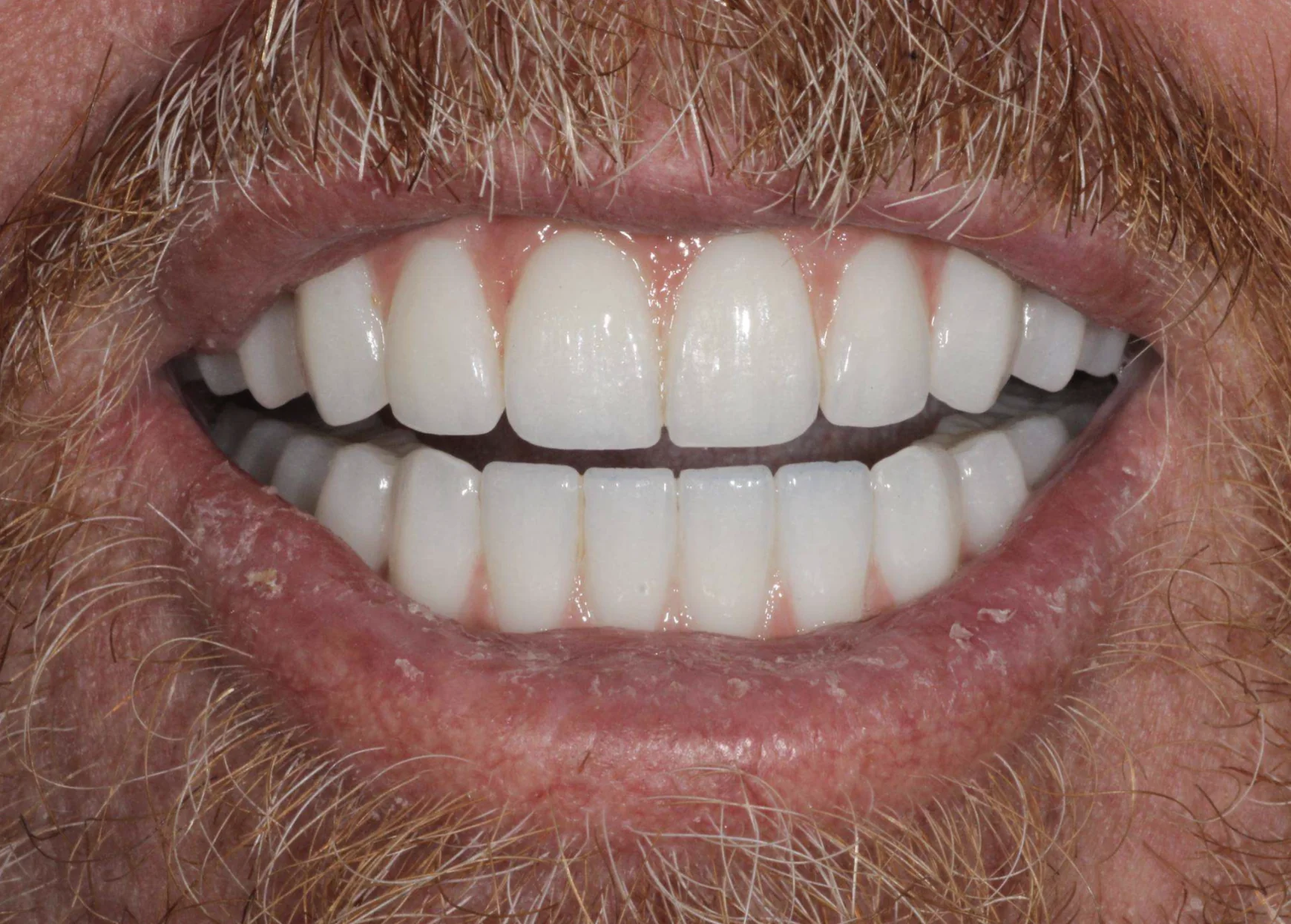
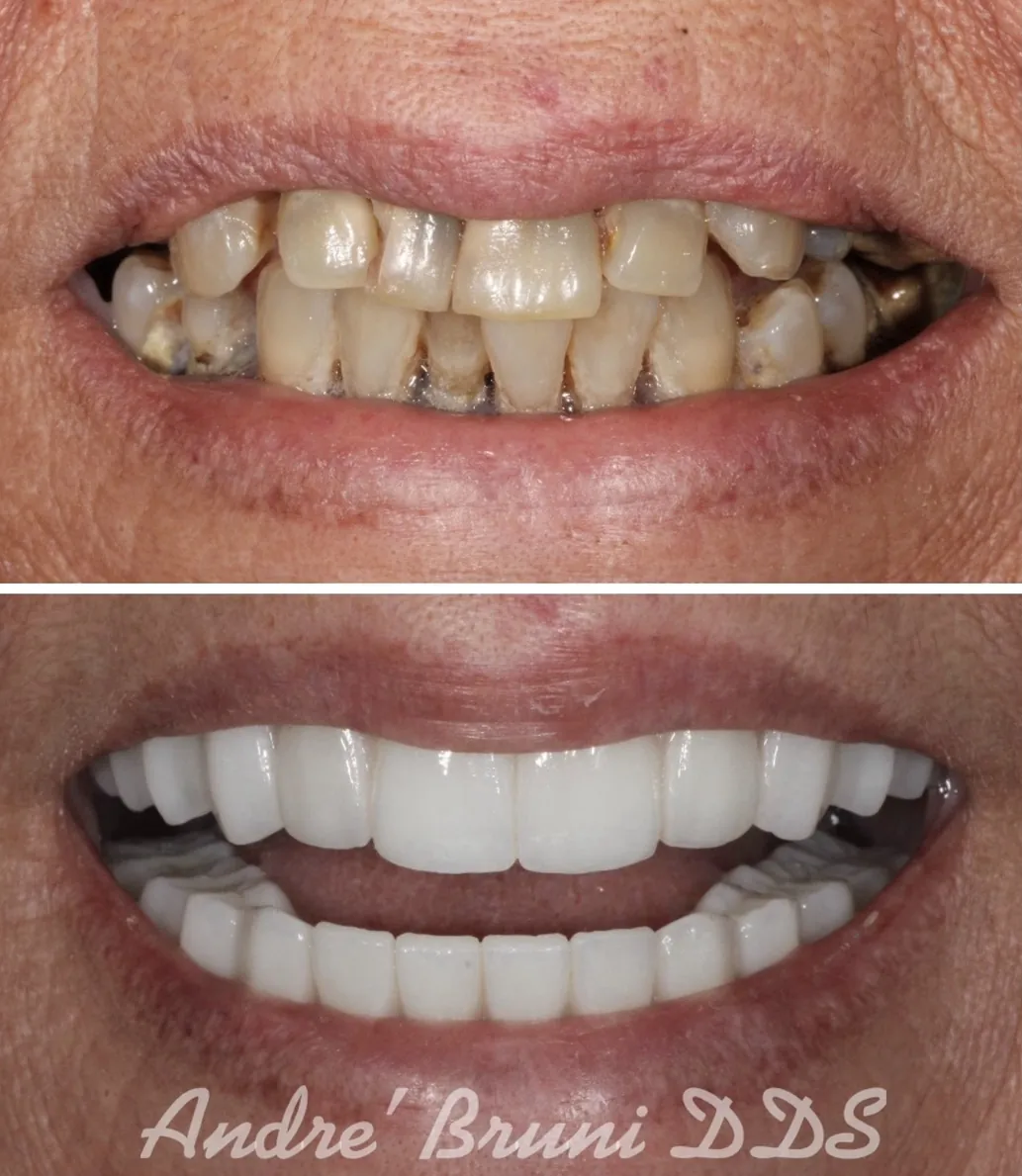
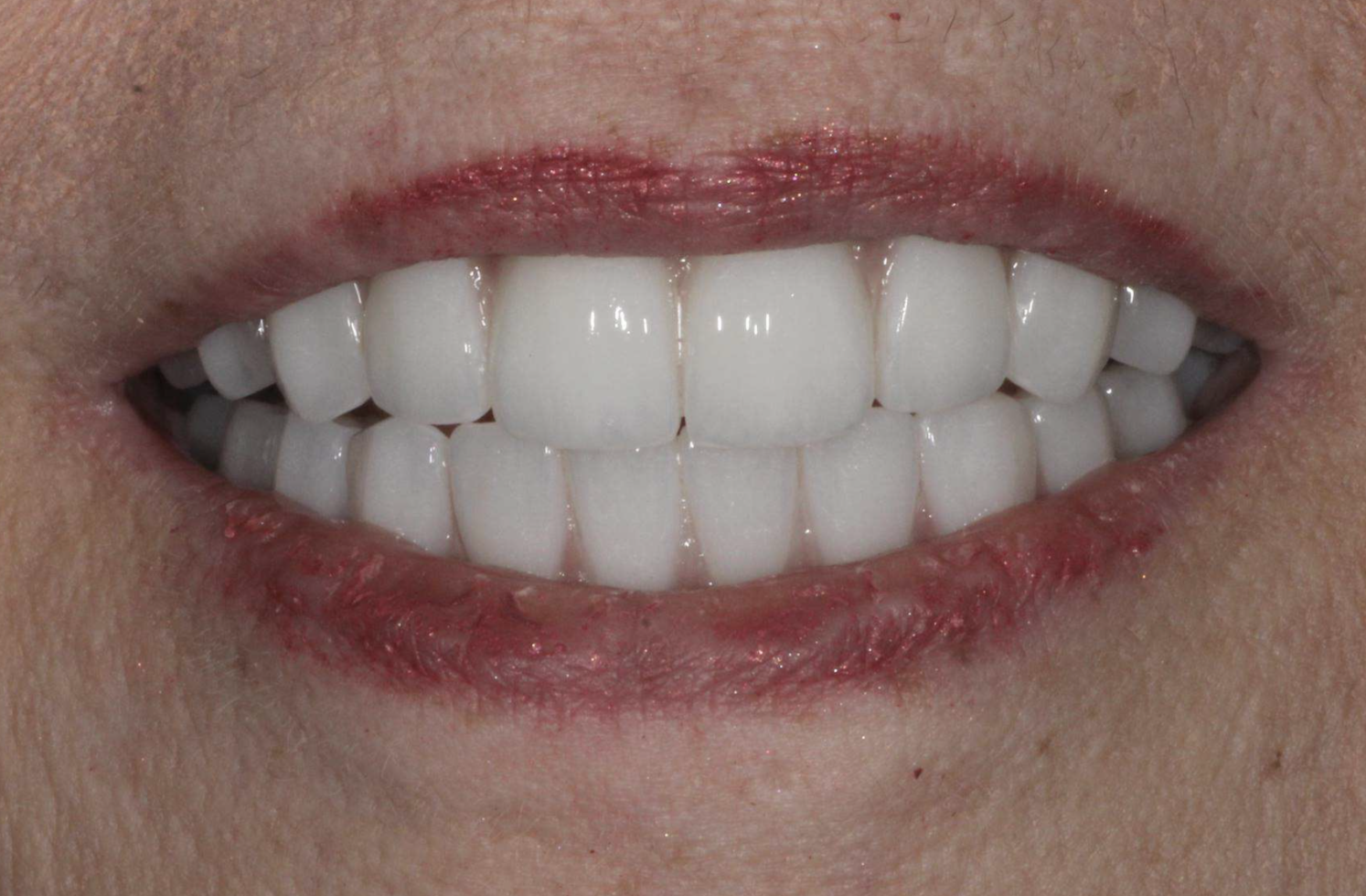
Both can produce excellent cosmetic results.
The final appearance depends on many factors, including:
- Location of the missing tooth
- Gum and bone architecture
- Smile line
- Condition of neighboring teeth
- Crown material
- Laboratory quality
- Implant position
- Restorative design
Replacing a front tooth can be particularly demanding because the gum tissue and symmetry around the tooth are highly visible.
The implant needs to be planned with the final restoration in mind.
In some situations, a bridge may actually provide the better cosmetic solution. In others, an implant allows us to replace the tooth while leaving adjacent teeth untouched.
Which Option Is Faster?
A traditional bridge can often be completed faster because there is no need to wait for an implant to integrate with the jawbone.
Dental implant treatment may involve:
- Implant placement
- Healing and osseointegration
- Abutment and crown placement
In some cases, a temporary tooth can be provided while the implant heals.
There are also situations where an implant can be placed at the time of extraction or restored temporarily soon after placement, but these approaches aren’t appropriate for every patient.
If treatment speed is one of your priorities, discuss it during your consultation.
Does an Implant Require Surgery?
Yes.
Dental implant placement is a surgical procedure.
The implant is positioned in the jawbone after the area has been appropriately evaluated and anesthetized.
A bridge generally doesn’t require implant surgery because the restoration is supported by natural teeth.
For patients who have significant anxiety about implant treatment, sedation dentistry may be an option depending on medical history and the planned procedure.
What If There Isn’t Enough Bone for an Implant?
Dental implants require adequate bone for support.
If a tooth has been missing for a long time, the bone in that area may have changed. Bone loss can also result from periodontal disease, infection, trauma, or other factors.
At Pearl Dental Group, we use 3D CBCT imaging when evaluating implant cases to assess the available bone and surrounding anatomy.
If adequate bone isn’t available, bone grafting may sometimes be considered.
However, adding grafting can increase the complexity, treatment time, and cost of implant treatment.
In some situations, those factors may make a bridge more attractive.
Which Is Easier to Clean?
Both implants and bridges require excellent oral hygiene.
A single implant crown can often be cleaned in a manner similar to a natural tooth, although your dental team may recommend specific techniques or cleaning aids.
A traditional bridge requires cleaning underneath the replacement tooth because the connected restoration prevents conventional floss from simply passing between each unit from the chewing surface.
Floss threaders, interdental brushes, water flossers, or other hygiene aids may be recommended.
Whichever restoration you choose, long-term success depends heavily on maintaining the surrounding teeth and gums.
Does an Implant Help Preserve Bone?
When a natural tooth is removed, the bone in that area can change over time.
A dental implant placed in the jawbone can help maintain bone in the area surrounding the implant by providing functional stimulation.
A traditional bridge replaces the visible tooth but does not place an implant into the missing-tooth site.
However, this doesn’t mean an implant completely prevents all future bone or gum changes. The tissues surrounding both natural teeth and implants can change over time.
Which Lasts Longer: An Implant or Bridge?
Both dental implants and bridges can provide many years of service, but neither should be described as guaranteed for life.
Their longevity depends on numerous factors.
For an implant, these may include:
- Implant health
- Bone and gum health
- Oral hygiene
- Bite forces
- Smoking
- Medical conditions
- Maintenance
- Condition of the implant restoration
For a bridge, longevity can also depend heavily on the supporting teeth.
Decay, fracture, periodontal disease, or other problems involving one of the supporting teeth can affect the entire bridge.
That’s one important difference between the two approaches.
What Happens If One of the Supporting Teeth Fails?
With a traditional bridge, multiple teeth are connected together.
If one supporting tooth develops a significant problem, the entire bridge may be affected.
For example, if decay develops underneath one of the supporting crowns, the bridge may need to be removed or replaced to treat the tooth.
An implant restoration is independent of neighboring teeth.
That doesn’t make an implant immune to problems, but complications involving an adjacent natural tooth don’t necessarily require replacement of the implant crown.
Dental Implant vs. Bridge Cost
Cost is an important part of the decision.
A bridge and implant have very different treatment structures, so comparing only the initial fee doesn’t always provide the full picture.
With an implant, treatment may include:
- Implant placement
- Abutment
- Implant crown
- Possible extraction
- Possible bone grafting
- Imaging and treatment planning
With a bridge, treatment generally involves restoring multiple teeth because the adjacent teeth support the replacement tooth.
The best financial comparison should consider both the initial treatment cost and the condition of the neighboring teeth.
If you’d like a deeper explanation of pricing, read our guide to dental implant costs in Baton Rouge.
When Would We Generally Favor a Dental Implant?
A dental implant may be particularly attractive when:
- Only one tooth is missing
- Neighboring teeth are healthy
- Adequate bone is available
- The patient wants an independently supported replacement
- The patient is an appropriate surgical candidate
- Preserving neighboring tooth structure is a priority
However, every case still requires individual evaluation.
When Might a Bridge Make More Sense?
A traditional bridge may deserve serious consideration when:
- Neighboring teeth already need crowns
- Implant surgery isn’t appropriate or desired
- Bone grafting would significantly complicate implant treatment
- Treatment time is an important consideration
- Anatomy makes implant placement less desirable
- Medical considerations affect implant candidacy
- The patient prefers a nonsurgical alternative
A bridge isn’t an inferior treatment simply because implants exist.
For the right patient, a well-designed bridge can still be an excellent treatment.
What About Doing Nothing?
Leaving a missing tooth untreated is also technically an option in some situations, but it’s important to understand the possible consequences.
Depending on the location, neighboring teeth may shift, opposing teeth may change position, chewing can be affected, and the bone and gum tissue in the missing-tooth area can change.
Not every missing tooth necessarily needs replacement, however.
For example, the consequences of losing a tooth at the very back of the mouth may be different from losing a tooth in a highly visible or functionally important area.
Your dentist can help determine whether replacement is recommended.
How We Decide Between an Implant and Bridge at Pearl Dental Group
At Pearl Dental Group, the decision starts by looking beyond the missing tooth.
We evaluate:
- Neighboring teeth
- Bone
- Gum tissue
- Bite
- Available space
- Medical history
- Appearance
- Oral hygiene
- Patient preferences
- Cost
- Long-term restorative needs
For implant cases, 3D CBCT imaging and digital treatment planning can provide additional information about the available bone and anatomy.
Our goal is to recommend the treatment that makes the most sense for the entire mouth rather than automatically recommending one solution.
Dental Implant or Bridge: Which Is Better for You?
If the teeth on either side of a missing tooth are completely healthy, a dental implant often has an important advantage: the neighboring teeth usually don’t have to be prepared to support the replacement tooth.
If those neighboring teeth already need significant restorative treatment, however, a bridge may become much more attractive.
That’s why the answer to “implant or bridge?” isn’t found in a generic online comparison.
It requires evaluating your actual teeth.
At Pearl Dental Group in Baton Rouge, we provide both traditional restorative dentistry and dental implant treatment, allowing us to evaluate the advantages and disadvantages of each approach for your particular situation.
Schedule a consultation with Pearl Dental Group to find out whether a single-tooth implant, dental bridge, or another treatment option makes the most sense for you.
This article provides general educational information and is not a substitute for individualized dental or medical advice. Treatment recommendations vary based on each patient’s dental condition, anatomy, health, and individual circumstances.