





For patients considering full-mouth dental implants, choosing the implants is only part of the treatment decision. The material used to make the final teeth is also important.
One option for a definitive full-arch restoration is a zirconia fixed implant bridge.
Zirconia is a strong dental ceramic that can be used to create a fixed restoration supported by multiple dental implants. Unlike a removable denture, a zirconia fixed bridge is secured to the implants and is not routinely removed by the patient.
At Pearl Dental Group in Baton Rouge, we use zirconia for appropriate definitive full-arch implant restorations because it can provide a combination of strength, appearance, function, and cleansability when properly designed.
If you’re considering full-mouth dental implants, understanding the restoration that goes on top of the implants is just as important as understanding the surgery.
What Is a Zirconia Fixed Implant Bridge?
A zirconia fixed implant bridge is a prosthetic restoration designed to replace an entire arch of missing or failing teeth.
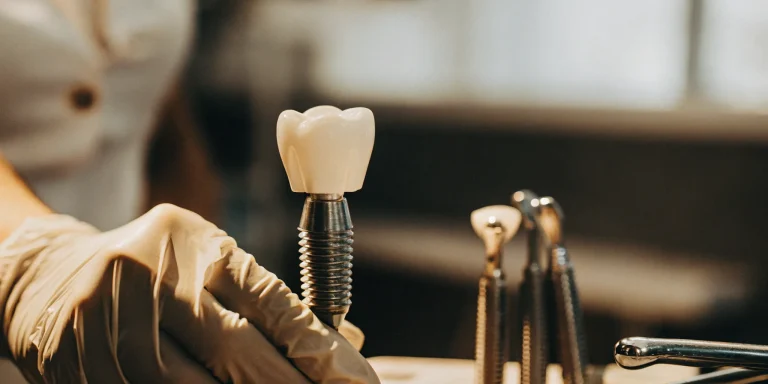
The bridge is supported by dental implants placed in the jawbone.
Depending on the treatment plan, multiple implants are positioned throughout the arch and used to support the restoration.
You may hear this type of treatment described as:
- Full-arch dental implants
- Full-mouth dental implants
- All-on-4
- All-on-X
- Fixed implant bridge
- Zirconia implant bridge
- Fixed full-arch restoration
Although these terms are sometimes used interchangeably in advertising, they don’t always describe exactly the same treatment.
The number of implants, restorative design, materials, and surgical approach should be individualized to the patient.
What Is Zirconia?
Zirconia—more specifically zirconium dioxide—is a ceramic material widely used in modern restorative dentistry.
It can be used for:
- Dental crowns
- Dental bridges
- Implant crowns
- Full-arch implant restorations
Zirconia is popular because it combines high strength with the ability to create a tooth-colored restoration.
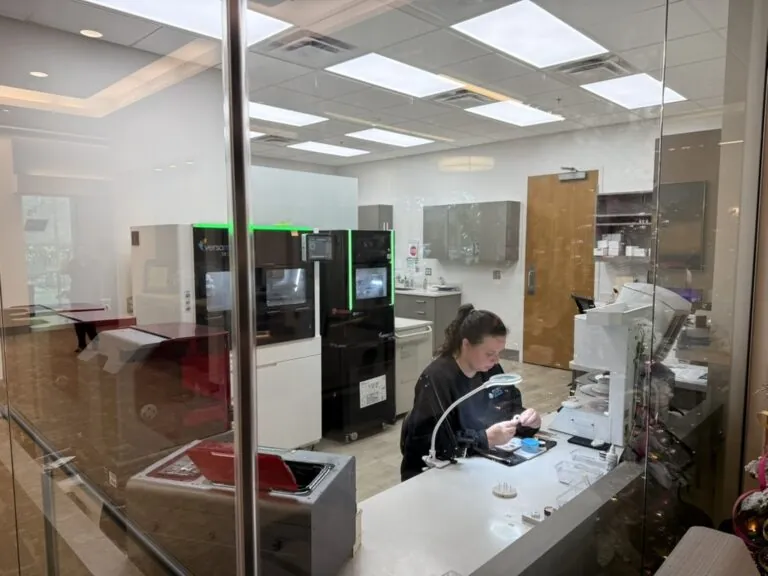
Modern dental laboratory techniques also allow zirconia restorations to be characterized with different shades, contours, and surface details to create a more natural appearance.
Why Use Zirconia for Full-Mouth Dental Implants?
Full-arch restorations need to withstand substantial forces.
Unlike a single crown replacing one tooth, a full-arch bridge replaces an entire row of teeth and must function as one larger prosthetic system.
Zirconia offers several potential advantages.
Strength
Zirconia is a high-strength ceramic material that can be used for large implant-supported restorations.
This makes it attractive for patients who need a durable definitive prosthesis.
Appearance
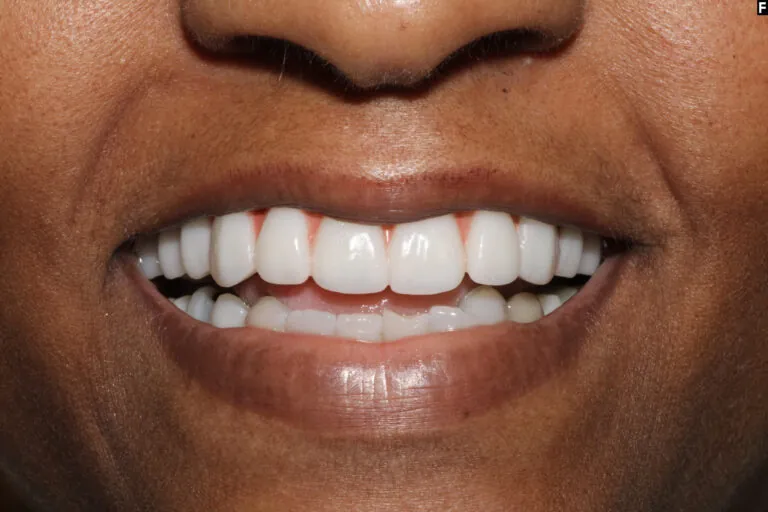
Zirconia can be designed to resemble natural teeth and, when needed, natural-looking gum tissue.
Color, contour, tooth position, texture, and other details can be incorporated into the final restoration.
Stain Resistance
The polished surfaces of zirconia generally resist staining better than some traditional denture materials.
That can help the restoration maintain its appearance over time when properly cared for.
Hygiene
A properly designed and polished zirconia restoration can provide surfaces that are relatively easy to clean.
However, this does not mean zirconia implant bridges are maintenance-free.
Patients still need to clean underneath the restoration and around the implants.
Zirconia vs. Acrylic Full-Arch Implant Teeth
Patients researching All-on-4 dental implants often encounter both zirconia and acrylic-based restorations.
These materials are very different.
Traditional acrylic or composite full-arch prostheses may use denture-type teeth and acrylic or composite materials over a supporting framework.
Zirconia restorations are fabricated from dental ceramic.
Potential differences can involve:
- Strength
- Wear
- Appearance
- Stain resistance
- Repairability
- Weight
- Sound during chewing
- Cost
- Laboratory process
There isn’t one material that’s ideal for every clinical situation.
The restoration needs to be selected based on the patient’s anatomy, bite, implant position, opposing teeth, restorative space, and other factors.
Are Zirconia Implant Bridges Permanent?
The word “permanent” needs some clarification.
A zirconia fixed bridge is not removable by the patient like a traditional denture.
It is secured to the dental implants and designed to remain in the mouth during normal daily activities, sleeping, eating, and speaking.
However, dentists generally prefer the term fixed rather than permanent.
Why?
Because every dental restoration can eventually require professional maintenance, repair, removal, or replacement.
A zirconia bridge may need to be professionally removed if the dentist needs to evaluate implants, replace components, repair the restoration, or address another clinical issue.
So these are best described as fixed implant teeth, not indestructible permanent teeth.
How Is a Zirconia Bridge Attached to Dental Implants?
Full-arch implant bridges are commonly secured to implant components using prosthetic screws.
This allows the restoration to remain firmly attached during normal use while still giving the dentist the ability to remove it professionally when clinically necessary.
The screw-access areas are typically sealed with restorative material after the bridge is secured.
Patients don’t routinely remove the restoration themselves.
Do You Get Zirconia Teeth the Same Day as Implant Surgery?
Usually, the teeth placed immediately after implant surgery are temporary, not the definitive zirconia restoration.
For appropriate patients undergoing full-arch treatment, a fixed temporary prosthesis may be placed on or around the day of surgery.
This is what is often marketed as “teeth in a day.”
But the implants still need time to heal.
During the healing period, the bone integrates with the implants through a biological process called osseointegration.
After healing and once the dental team determines that the implants and tissues are ready, the definitive restoration can be designed and fabricated.
Why Not Place the Final Zirconia Bridge Immediately?
The mouth can change during healing.
Following extractions and implant placement, swelling decreases, gum tissues change, and surgical sites mature.
The temporary restoration provides an opportunity to evaluate important factors such as:
- Tooth position
- Bite
- Speech
- Appearance
- Smile line
- Lip support
- Function
- Patient preferences
Information from the temporary stage can then be incorporated into the final restoration.
The goal shouldn’t simply be to make the final zirconia bridge as quickly as possible.
The goal is to make the right final bridge.
What Does a Zirconia Implant Bridge Look Like?
A full-arch restoration doesn’t necessarily consist only of white teeth.
Patients who have experienced bone and gum loss may need a restoration that replaces both teeth and lost gum tissue.
In these cases, the zirconia bridge may incorporate pink ceramic characterization designed to simulate natural gingiva.
This allows the restorative team to create appropriate tooth proportions even when significant tissue has been lost.
The design is individualized according to the patient’s smile, anatomy, lip position, and restorative needs.
Can Zirconia Teeth Look Natural?
They can.
Natural-looking full-mouth implant dentistry involves much more than choosing a shade of white.
Factors include:
- Tooth shape
- Tooth length
- Tooth width
- Tooth position
- Translucency
- Surface texture
- Incisal characteristics
- Gum contours
- Smile line
- Lip support
- Facial proportions
One of the goals of the design process is to avoid creating teeth that look excessively uniform or artificial.
Patients should have an opportunity to discuss their cosmetic preferences with the restorative team.
How White Should Zirconia Implant Teeth Be?
That’s a personal decision.
Some patients want a very bright, dramatic smile.
Others prefer a more natural shade.
The important consideration is how the teeth fit the patient’s face, age, complexion, smile, and personal preferences.
A good full-mouth restoration shouldn’t automatically give every patient exactly the same teeth.
Are Zirconia Bridges Strong?
Zirconia is known for its strength, which is one reason it is used for full-arch implant restorations.
However, strong does not mean unbreakable.
Any dental restoration can experience complications.
Potential problems may include:
- Chipping
- Fracture
- Wear
- Prosthetic screw loosening
- Damage to components
- Changes in the bite
Patients who clench or grind their teeth may place particularly heavy forces on implant restorations.
Restorative design and bite management remain important regardless of the material used.
What Does Eating With a Zirconia Fixed Bridge Feel Like?
A fixed implant-supported restoration provides substantially different stability from a traditional removable denture.
Because the restoration is supported by implants rather than relying solely on the gums, patients generally don’t experience the same type of denture movement during chewing.
However, implant-supported teeth are not identical to natural teeth.
Natural teeth have periodontal ligaments that provide sensory feedback. Dental implants interact directly with bone and don’t have the same ligament structure.
Patients generally adapt to the differences as they begin functioning with their new restoration.
Can Food Get Under a Zirconia Fixed Bridge?
Yes.
This is one of the most important things patients should understand.
A zirconia fixed bridge does not emerge from the gums exactly like individual natural teeth.
There is a transition area underneath the restoration that must be designed to balance:
- Appearance
- Speech
- Comfort
- Strength
- Hygiene access
Food and plaque can accumulate underneath a fixed bridge.
That means patients need to learn how to clean beneath it every day.
How Do You Clean a Zirconia Implant Bridge?
Cleaning a full-arch fixed restoration is different from simply brushing natural teeth.
Patients may need a combination of:
- Electric or manual toothbrush
- Water flosser
- Floss threaders
- Specialized implant floss
- Interdental brushes
- End-tuft brushes
The exact technique depends on the design of the restoration.
Patients should be shown how to clean underneath their specific bridge before treatment is considered complete.
For a more detailed explanation, see our guide to dental implant maintenance and cleaning.
Do Zirconia Implant Bridges Need Professional Cleanings?
Yes.
Even though zirconia cannot develop cavities, the implants are surrounded by living gum tissue and bone.
Professional maintenance allows the dental team to evaluate:
- Gum health
- Plaque and calculus
- Implant stability
- Bone levels when indicated
- Bite
- Prosthetic screws and components
- Restoration integrity
- Hygiene access
Fixed implant restorations should be monitored throughout the patient’s lifetime.
Can Zirconia Implant Bridges Develop Cavities?
The zirconia bridge itself cannot develop tooth decay.
However, that does not eliminate the need for hygiene.
The primary biological concern around dental implants is the health of the gum tissue and supporting bone.
Inflammation around implants can progress to conditions such as peri-implant mucositis and peri-implantitis.
Keeping the restoration clean is an important part of protecting the implants underneath it.
What Happens If a Zirconia Bridge Chips or Breaks?
Treatment depends on the location and severity of the damage.
Some issues may be repairable. Others may require laboratory treatment or replacement of the restoration.
A broken prosthetic tooth or restoration also doesn’t automatically mean the dental implants themselves have failed.
The implants and the prosthesis are separate components of the overall treatment.
If something feels loose, chipped, or different, have it evaluated rather than continuing to chew on it.
Zirconia Doesn’t Eliminate Implant Complications
A strong final restoration doesn’t eliminate biological problems around implants.
Patients can still develop:
- Gum inflammation
- Peri-implant disease
- Bone loss
- Hygiene-related problems
- Prosthetic complications
This is why choosing a high-quality restorative material is only one part of successful implant treatment.
Planning, implant positioning, restoration design, home care, and professional maintenance are all important.
Who Is a Candidate for a Zirconia Fixed Implant Bridge?
Zirconia fixed bridges may be appropriate for patients who are candidates for full-arch implant treatment.
These may include people who:
- Are missing all or most of their teeth
- Have severely failing teeth
- Struggle with removable dentures
- Want a fixed tooth replacement option
- Have appropriate anatomy for implant treatment
- Are healthy enough for the planned procedures
- Understand the hygiene requirements
- Are committed to ongoing professional maintenance
Not everyone with missing teeth needs a full-arch restoration.
Some patients may be better served by individual implants, implant-supported bridges, an implant-supported removable denture, or traditional restorative dentistry.
Why Implant Position Matters for Zirconia Bridges
The final bridge should be considered before the implants are placed.
Implants need to support the planned restoration in appropriate positions.
Poor implant positioning can create challenges involving:
- Strength
- Appearance
- Screw access
- Bite
- Tooth position
- Hygiene
- Restorative space
At Pearl Dental Group, we use 3D CBCT imaging and digital treatment planning when evaluating implant cases.
Planning the surgical and restorative portions of treatment together is particularly important for full-mouth implant treatment.
Why the Final Restoration Matters as Much as the Implants
Patients understandably spend a lot of time researching dental implant brands, number of implants, and surgical techniques.
But once treatment is complete, the part you actually see, smile with, speak with, and chew with every day is the restoration.
That’s why patients considering full-mouth implants should ask questions about the final teeth.
Ask your provider:
- What material will my final teeth be made from?
- Will my final restoration be zirconia?
- Is the restoration fixed or removable?
- How will I clean underneath it?
- Who designs the final teeth?
- How will my bite be evaluated?
- What happens if the bridge chips or breaks?
- What maintenance will be required?
- Is the final restoration included in the quoted treatment fee?
These are important questions when comparing full-mouth implant treatment plans.
Zirconia Fixed Bridges at Pearl Dental Group
At Pearl Dental Group in Baton Rouge, we provide comprehensive full-mouth dental implant treatment for appropriate patients.
Our approach considers both the surgical placement of the implants and the design of the final restoration.
Using 3D imaging, digital treatment planning, and modern restorative workflows, we can plan treatment around the patient’s anatomy, bite, smile, and restorative goals.
For appropriate full-arch cases, zirconia provides an option for creating strong, fixed definitive teeth designed around the individual patient.
Considering a Zirconia Fixed Implant Bridge in Baton Rouge?
If you’re struggling with failing teeth or removable dentures and are considering fixed full-mouth dental implants, don’t focus only on the implants.
Ask about the teeth that will ultimately be attached to them.
The material, design, bite, appearance, hygiene access, and long-term maintenance of the final bridge are all important parts of treatment.
At Pearl Dental Group in Baton Rouge, we can evaluate your teeth, bone, bite, and treatment goals to determine whether a zirconia fixed implant bridge or another tooth replacement option may be appropriate for you.
Schedule a dental implant consultation with Pearl Dental Group to learn more about zirconia fixed bridges and full-mouth dental implant options.
This article provides general educational information and is not a substitute for individualized dental or medical advice. Implant candidacy, restorative materials, surgical procedures, and treatment recommendations vary by patient.