






If you’re considering dental implants in Baton Rouge, one of your biggest questions may be: What is the recovery actually like?
For many patients, the idea of implant surgery sounds more intimidating than the recovery itself. While every patient’s experience is different, understanding what typically happens during the first few days, weeks, and months can make the process much easier to prepare for.
At Pearl Dental Group, we believe patients should know what to expect before treatment begins. Here’s a closer look at dental implant healing and recovery, including what’s normal, how long healing can take, and when you should contact your dentist.
How Long Does It Take to Recover From Dental Implant Surgery?
There are really two different healing periods after dental implant placement.
Initial recovery refers to healing of the gums and surgical area. Many patients begin feeling considerably better within several days, although soreness, swelling, and tenderness can last longer depending on the procedure.
Osseointegration is the longer biological process in which the bone heals around and integrates with the implant. This typically takes several months and is an important part of creating a stable foundation for the replacement tooth.
Your individual healing time can depend on factors such as:
- Number of implants placed
- Location of the implants
- Bone quality and quantity
- Whether bone grafting was performed
- Whether teeth were extracted at the same appointment
- Type of restoration being placed
- Smoking or nicotine use
- Medical history
- Oral hygiene
- Complexity of the procedure
Your dentist can give you a more individualized recovery timeline after evaluating your specific case.
What to Expect During the First 24 Hours
The first day is primarily about protecting the surgical area and allowing the initial healing process to begin.
Some bleeding or oozing can occur following surgery. Mild to moderate soreness and swelling are also common.
Patients should carefully follow the postoperative instructions provided by their dental team. Depending on the procedure, these instructions may include recommendations regarding medications, oral hygiene, diet, activity, and care of the surgical site.
It’s particularly important to avoid disturbing the surgical area during the early stages of healing.
What to Expect During the First Few Days
Swelling and tenderness can be more noticeable during the first several days after implant surgery.
You may also notice bruising around the face or jaw, particularly after more extensive procedures.
During this period, many patients prefer softer foods that require minimal chewing.
Examples may include:
- Eggs
- Yogurt
- Smoothies
- Mashed potatoes
- Soft pasta
- Soup that has cooled to a comfortable temperature
- Soft fish
- Applesauce
Your dental team may give you more specific dietary instructions based on the location and extent of your surgery.
When Can I Return to Work After Dental Implants?
This depends considerably on the procedure.
Someone receiving a straightforward single dental implant may have a very different recovery than someone undergoing multiple extractions, bone grafting, and full-arch implant surgery.
Your occupation matters as well. A patient with a desk job may be comfortable returning to work sooner than someone whose job requires strenuous physical activity.
If sedation is used, you’ll also receive specific instructions regarding driving, work, and other activities following the procedure.
It’s best to discuss your work schedule with your implant dentist before surgery so you can plan appropriately.
What Is Osseointegration?
One of the most important parts of dental implant healing happens beneath the gums.
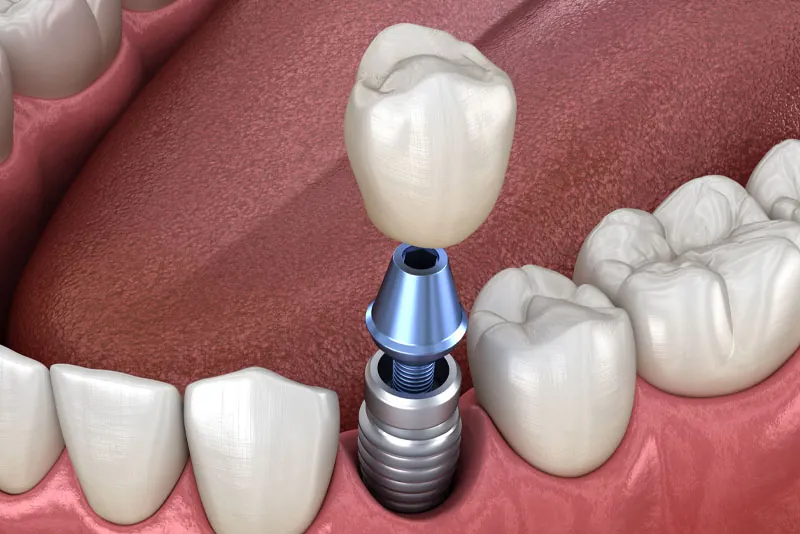
Osseointegration is the process through which living bone forms a close connection with the implant surface.
This biological healing process helps create the stability needed for an implant to support a tooth or dental prosthesis.
Even though you may feel completely normal relatively soon after surgery, the implant can still be healing beneath the surface. That’s why it’s important to follow instructions regarding chewing and use of the implant during this period.
Feeling better does not necessarily mean the implant has completed the healing process.
Can You Get a Tooth the Same Day as a Dental Implant?
Sometimes.
In selected cases, an implant can be placed and restored with a temporary tooth or temporary fixed restoration on the same day. This is often referred to as immediate loading or immediate provisionalization.
However, receiving teeth the same day does not mean the implants are fully healed.
The bone still needs time to integrate with the implants.
Whether immediate teeth are appropriate depends on several factors, including implant stability, bone quality, bite forces, implant position, and the overall treatment plan.
Your implant dentist will determine whether immediate restoration is appropriate for your situation.
Recovery After Full-Mouth Dental Implants
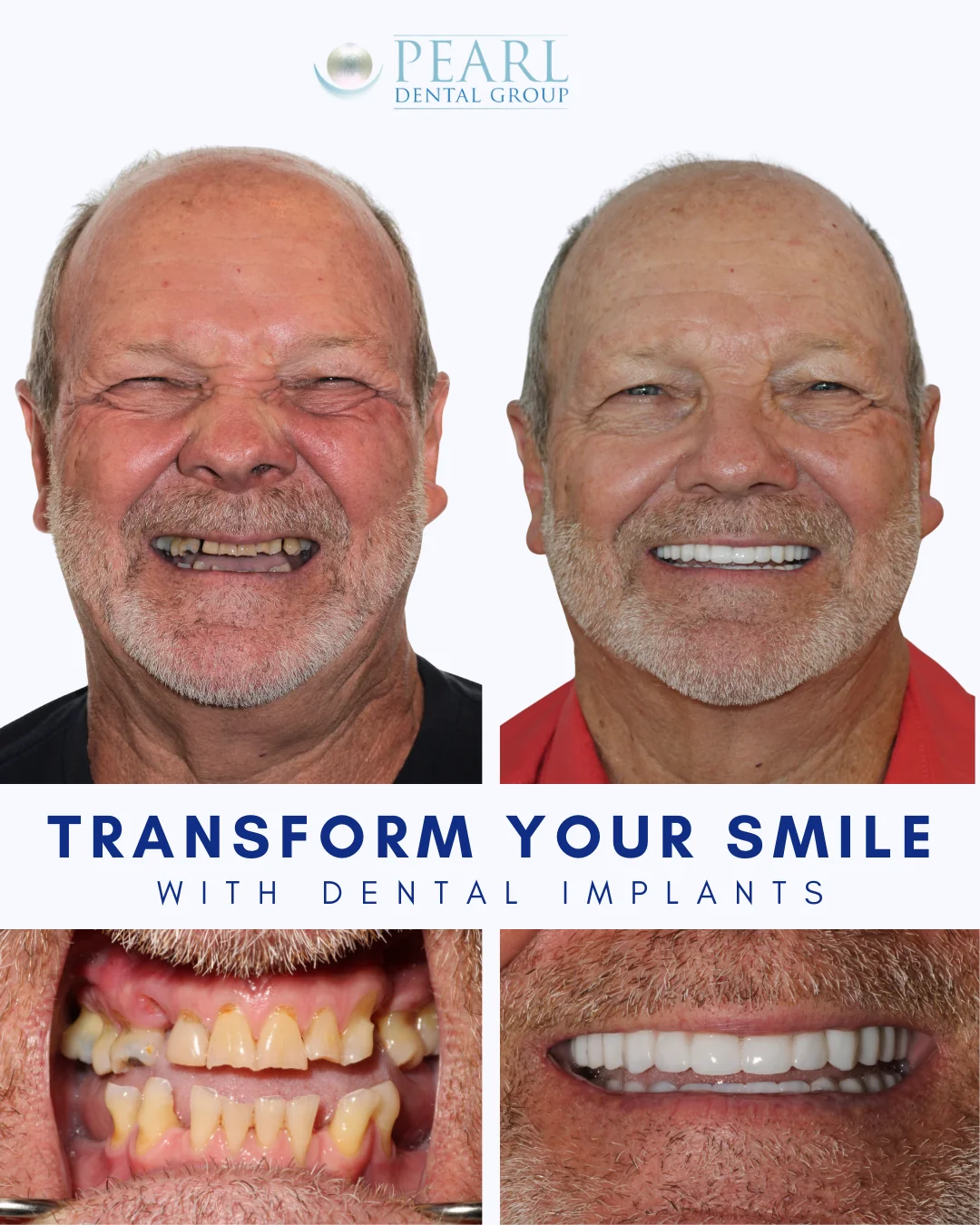
Recovery after full-mouth or full-arch dental implant treatment is different from recovering from a single implant.
Full-arch treatment may involve:
- Multiple dental implants
- Several or complete tooth extractions
- Bone reshaping
- Bone grafting when necessary
- Temporary fixed teeth
- A later transition to the definitive restoration
Because more extensive treatment is involved, swelling, bruising, and soreness may be greater than with a single implant.
Patients with a temporary fixed full-arch restoration also need to follow their dentist’s dietary instructions carefully. The teeth may feel strong, but the implants underneath are still healing.
Protecting the implants from excessive forces during this period is an important part of treatment.
What Should You Eat While Dental Implants Are Healing?
Diet recommendations vary according to the procedure and stage of healing.
Early in recovery, softer foods are generally easier and more comfortable.
As healing progresses, your dentist may gradually allow additional foods.
For patients with full-arch implant restorations, dietary restrictions may continue longer because excessive chewing forces can place stress on implants that are still integrating.
Don’t assume that because your temporary teeth feel secure, you can immediately return to eating everything you ate before surgery.
Follow the specific dietary instructions provided by your implant team.
How Should I Clean Around a Healing Dental Implant?
Keeping the mouth clean is important, but a newly treated surgical area may require different care than your natural teeth.
Your dental team will provide instructions based on your procedure. Recommendations may vary depending on whether you have a single implant, sutures, bone grafting, temporary teeth, or a full-arch restoration.
Once healing progresses, maintaining dental implants requires consistent home care and professional maintenance.
For patients with fixed full-arch restorations, hygiene is particularly important because food and plaque can accumulate underneath the prosthesis. Cleaning a fixed implant bridge is different from simply brushing natural teeth.
Our team can demonstrate the appropriate techniques and cleaning aids for your particular restoration.
What Can Slow Dental Implant Healing?
Several factors can interfere with or complicate healing.
These may include:
- Smoking and nicotine use
- Poor oral hygiene
- Uncontrolled medical conditions
- Certain medications or medical treatments
- Excessive pressure on a healing implant
- Failure to follow postoperative instructions
- Infection
- Poor bone quality
- Teeth grinding or excessive bite forces
This is one reason your medical and dental history is an important part of implant planning.
Be sure your dentist knows about your medications, health conditions, previous surgeries, and tobacco or nicotine use before treatment.
What Symptoms Should I Call My Dentist About?
Some discomfort, swelling, bruising, and minor bleeding can be expected after many implant procedures.
However, you should contact your dental office if something doesn’t seem right or symptoms are becoming worse rather than improving.
Reasons to contact your dentist may include:
- Persistent or increasing bleeding
- Pain that becomes significantly worse after initially improving
- Increasing swelling after the expected postoperative period
- Fever or other signs of illness
- Drainage or a persistent bad taste from the surgical area
- A restoration that feels loose or broken
- An implant component that appears to be moving
- Persistent numbness or altered sensation
- Any other symptom that concerns you
If you’re unsure whether something is normal, contact your dental team rather than waiting for the next scheduled appointment.
Does Age Affect Dental Implant Healing?
Age alone does not necessarily prevent someone from receiving dental implants.
Overall health, bone condition, medications, oral hygiene, and the ability to heal appropriately are often more important considerations than the number on a patient’s driver’s license.
We’ve seen patients seek implant treatment at many different stages of life.
The appropriate approach should be based on the individual rather than age alone.
How We Plan Dental Implant Treatment at Pearl Dental Group
Successful implant treatment begins before the implant is ever placed.
At Pearl Dental Group in Baton Rouge, we use 3D CBCT imaging and digital treatment planning to evaluate the jawbone, teeth, and surrounding anatomy when planning dental implant treatment.
Depending on the patient’s needs, treatment may involve a single implant, several implants, implant-supported dentures, or fixed full-arch dental implants.
Our goal is to develop a treatment plan based on the patient’s anatomy, dental condition, functional needs, and long-term goals rather than taking a one-size-fits-all approach.
The Most Important Part of Implant Recovery: Follow Your Individual Instructions
It’s easy to search online for a universal dental implant recovery timeline, but there isn’t one that applies perfectly to every patient.
A healthy patient receiving one straightforward implant may recover very differently from someone undergoing multiple extractions and full-mouth reconstruction.
The postoperative instructions you receive from your own implant dentist should always take priority over general information you find online.
Considering Dental Implants in Baton Rouge?
Dental implant recovery is a process, but most of the healing occurs quietly in the background as the bone and tissues adapt to the implants.
Understanding the difference between feeling recovered and an implant being fully integrated is particularly important. Even after discomfort and swelling have resolved, your implants may still be going through the biological healing process.
If you’re considering dental implants in Baton Rouge, Pearl Dental Group can evaluate your teeth, bone, and overall dental condition and explain what treatment—and recovery—would likely involve in your particular case.
Whether you need to replace a single tooth or are considering full-mouth dental implants, knowing what to expect can make the process much easier to approach with confidence.
Schedule a dental implant consultation with Pearl Dental Group in Baton Rouge to learn more about your treatment options and what you can expect during implant healing and recovery.
This article provides general educational information and is not a substitute for individualized dental or medical advice. Always follow the postoperative instructions provided by your treating dentist.